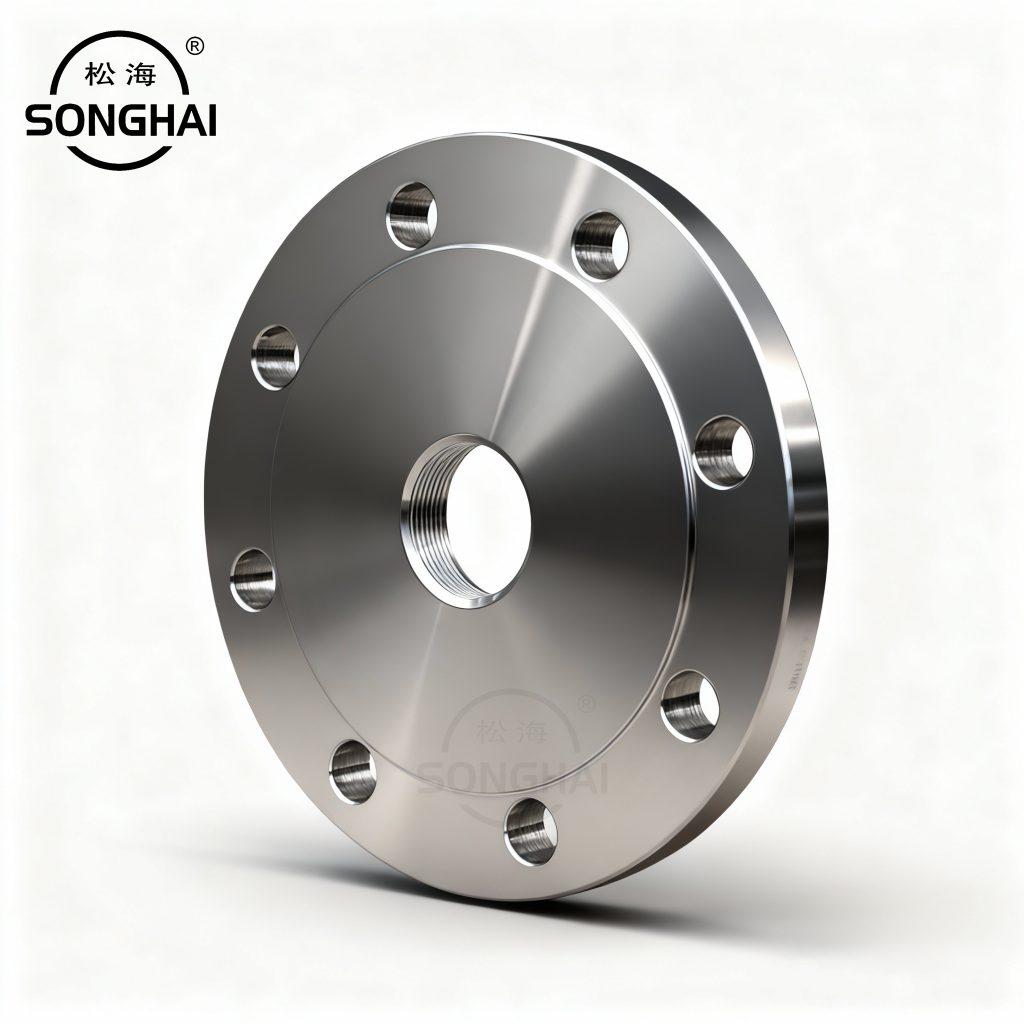
Threaded vs flanged is a practical question for anyone selecting a pipe connection without reducing it to a single “better” option. A threaded flange joins to the pipe through internal threads; a weld-neck flange joins through a butt-welded tapered hub. Both can connect pipework to valves, equipment or another flanged component, but they place different demands on design, fabrication, inspection and long-term maintenance.
This guide compares threaded and weld-neck flange connections in an original, specification-focused way. The approved piping class, applicable code, equipment supplier requirements and project drawings are always the final authority for selection.
What does threaded vs flanged actually mean?
The phrase threaded vs flanged can be misleading because a threaded flange is itself a flange. The more useful comparison is usually threaded flange vs weld-neck flange: one uses a screwed pipe engagement, while the other uses a butt-welded neck. The bolted flange face then connects to a mating flange using the specified gasket and bolting.
Threaded flanges are commonly called screwed flanges. Their bore contains threads that engage with an externally threaded pipe end. They may be considered where welding is impractical or where the piping design permits a screwed connection. A weld-neck flange has a long tapered hub and a butt-weld end that is matched to the pipe; the transition is designed to distribute stress through the flange neck and pipe wall.
Threaded flange and weld-neck flange construction
| Feature | Threaded flange | Weld-neck flange | Why it matters |
|---|---|---|---|
| Pipe-end connection | Internal flange threads engage the pipe’s external threads. | Tapered neck is butt welded to the pipe. | Changes the fabrication method and connection geometry. |
| Installation work | Does not inherently require welding at the flange-to-pipe joint. | Requires qualified welding and fit-up control. | Hot-work restrictions and site access can affect the choice. |
| Stress transition | Loads are transferred through the threaded engagement and flange body. | Tapered hub transitions load into the pipe wall through the welded neck. | Pressure, temperature, vibration and cyclic duty require engineering review. |
| Typical size range | Often considered for smaller-bore threaded piping where permitted. | Used across a broad range of engineered piping sizes and duties. | The governing pipe class and availability control, not a rule of thumb. |
| Maintenance feature | Can be attractive where disassembly is permitted and threads can be accessed. | Provides a permanent welded pipe-end connection with bolted flange access at the face. | Consider lifecycle maintenance as well as first installation. |
When a threaded flange may be appropriate
A threaded flange may be suitable for a small-bore line where the project piping class explicitly allows threaded joints and where welding is not practical. It can simplify assembly in locations with restricted hot-work access, but this advantage should never override the process and mechanical requirements of the service.
Before selecting a threaded flange, review fluid properties, temperature range, pressure basis, vibration, thermal cycling, external corrosion, thread sealant compatibility and inspection access. Threaded joints can create geometric features that merit special consideration in corrosive, cyclic, high-temperature, high-vibration or cleanliness-sensitive service. A line that looks simple on a layout drawing may have a far more demanding operating profile.
When a weld-neck flange may be appropriate
Weld-neck flanges are frequently specified for engineered process piping where the approved design calls for a butt-welded connection and a tapered hub. The butt weld can be examined according to the project inspection plan, and the neck geometry is well suited to applications where the piping system must account for sustained loads, thermal movement or repeated operating cycles.
Selection still requires the complete joint specification: flange standard, nominal size, rating basis, facing, material grade, pipe schedule, weld-end preparation, gasket, bolting and required documentation. Do not assume that a weld-neck flange is automatically acceptable for every high-pressure or high-temperature service; it must match the project code calculation and piping material class.
Decision table: threaded vs weld-neck flange
| Selection question | Threaded connection review | Weld-neck connection review |
|---|---|---|
| Does the piping class permit it? | Confirm that threaded joints are explicitly allowed for the line and service. | Confirm the required flange standard, material and butt-weld detail. |
| Can hot work be performed? | May reduce flange-to-pipe welding needs, but all project controls still apply. | Requires qualified welding, access, WPS and inspection controls. |
| What are the mechanical loads? | Evaluate vibration, torsion, thermal cycling and external pipe loads at the threads. | Evaluate pipe loads, weld quality, alignment and stress distribution through the neck. |
| What is the service environment? | Review thread sealant, crevice exposure, corrosion and leak consequence. | Review weld material, corrosion allowance, post-weld treatment and inspection needs. |
| How will it be maintained? | Ensure that future disassembly will not damage threads or violate isolation requirements. | Plan access to the flange bolts and verify that the welded connection is correctly documented. |
Flange face, gasket and bolting still govern sealing
The pipe-end method does not determine whether the bolted flange face will seal. A threaded flange and a weld-neck flange both require a compatible facing, gasket and bolting set. Confirm the mating standard, face designation, surface condition, gasket material, gasket dimensions, bolt material and approved tightening method.
Never mix flanges based on similar outside diameters alone. Nominal size, pressure class, drilling pattern and facing can differ. A field modification intended to “make the bolts fit” can compromise the joint design. If two components do not match the drawing, stop and resolve the discrepancy through the project engineering process.
Procurement data for a complete flange order
| Order item | Threaded flange details | Weld-neck flange details |
|---|---|---|
| Connection definition | Thread form, size, pipe compatibility and any sealing compound restrictions. | Butt-weld end, pipe schedule or wall, bevel and weld procedure requirements. |
| Flange details | Standard, size, rating, facing, material and drilling. | Standard, size, rating, facing, material and drilling. |
| Material controls | Base material grade, markings, traceability and corrosion requirements. | Base material grade, markings, traceability and weld-material requirements. |
| Inspection records | Dimensional verification, thread inspection and material certification as required. | Dimensional verification, material certification and weld/NDE records as required. |
| Assembly package | Compatible gasket, bolting and approved installation procedure. | Compatible gasket, bolting and approved installation procedure. |
Installation and inspection checks
- Verify flange type, material, size, rating and facing against the controlled drawing before assembly.
- For threaded flanges, inspect thread condition, engagement, pipe-end preparation and compatibility of any specified sealant.
- For weld-neck flanges, confirm pipe schedule, bevel, alignment, WPS, welder qualification and required examination.
- Keep piping aligned and supported. Do not pull a misaligned spool into position with flange bolts.
- Install the project-specified gasket and use the approved bolting sequence and tightening method.
- Record material identity, inspection results and any approved deviation before commissioning.
Frequently asked questions
Is a threaded flange weaker than a weld-neck flange?
The answer depends on the exact design and service. A weld-neck configuration is often selected for demanding engineered piping services because of its butt-welded tapered hub, while a threaded flange can be acceptable within the limits of a piping class. The governing design and project specification decide suitability.
Can I replace a threaded flange with a weld-neck flange?
Only with engineering approval. The change affects pipe-end preparation, welding, inspection, material requirements and possibly the piping stress design.
Does a threaded flange eliminate leak risk?
No. Threaded joints still require correct design, compatible materials, thread engagement, installation and inspection. The bolted flange face also needs the right gasket and controlled tightening.
Final takeaway
For threaded vs flanged selection, first separate the two connection levels: a threaded flange uses a screwed pipe-end connection, while a weld-neck flange uses a butt-welded neck; both then seal at a bolted flange face. Select the configuration through the approved piping class and actual service conditions—not convenience alone. Songhai can support flange selection, dimensional verification and material documentation for industrial piping projects.