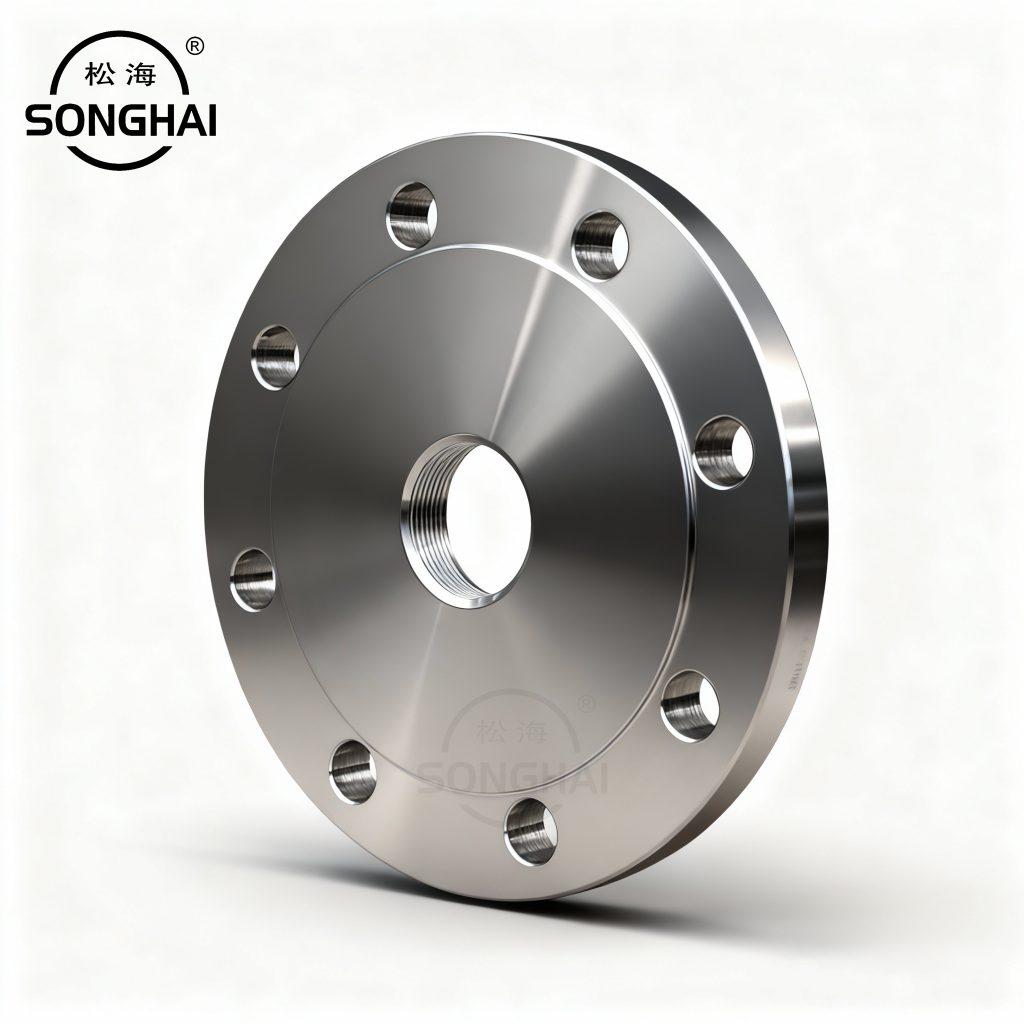
ASTM A105 is a widely specified material standard for forged carbon-steel piping components such as flanges, fittings and valves. Buyers searching for A105 material or an A105 steel flange are usually trying to confirm whether the component suits their pressure system, temperature range and fabrication requirements. One search term in this group, ASTM A705, refers to a different specification: age-hardening stainless-steel forgings. The two designations should never be treated as interchangeable.
This guide explains the scope of ASTM A105/A105M, the common SA-105 material designation used in ASME pressure-equipment contexts, what the “N” in A105N generally indicates, and how to write a clear purchasing specification. Confirm the applicable standard edition and project requirements before ordering.
What is ASTM A105 material?
ASTM A105/A105M covers forged carbon-steel piping components for pressure systems at ambient and higher temperatures. Typical products include flanges, forged fittings, valves and related parts. The specification defines requirements such as chemical composition, mechanical properties, heat treatment where required, testing, marking and documentation. The exact requirements depend on the edition and order details.
In everyday purchasing, “A105 material” often means a carbon-steel forging supplied to ASTM A105/A105M. It does not by itself define flange dimensions, pressure class, facing, bore, coating, gasket, bolting or the finished joint’s allowable operating pressure. Those are governed by the dimensional standard, design code, material condition and project specification.
ASTM A105, ASME SA-105 and A105N
| Designation | What it refers to | What to verify in the order |
|---|---|---|
| ASTM A105 / A105M | Carbon-steel forgings for piping applications under the ASTM specification. | Edition, product form, heat treatment, testing and supplementary requirements. |
| ASME SA-105 / SA-105M | ASME Boiler and Pressure Vessel Code material designation corresponding to carbon-steel piping forgings. | Applicable ASME Code section and edition; do not assume edition equivalence without checking. |
| A105N | Common industry notation for A105 supplied in a normalized condition. | State “normalized” explicitly, along with the governing specification, edition and required records. |
| ASTM A705 / A705M | Age-hardening stainless-steel forgings for general use. | Required grade/type, solution condition, aging treatment, properties and standard edition. |
Important: ASTM A705 is not another spelling of A105
The keyword ASTM A705 is relevant to material searches, but its scope differs substantially from A105. ASTM A705/A705M covers age-hardening stainless-steel forgings. These materials are supplied with specified heat-treatment conditions and property requirements for the grade ordered. ASTM A105/A105M, by contrast, covers forged carbon-steel piping components.
That means a buyer should not substitute A705 for A105, or A105 for A705, based on a similar number or a generic description such as “forged steel.” The alloy family, heat-treatment route, strength behavior, corrosion performance and intended service differ. If a project document lists A705 for a flange or fitting, confirm that the component product standard and design code permit that material and that the exact grade and condition are specified.
What does the “N” in A105N mean?
A105N is widely used to describe A105 material that has been normalized. Normalizing is a heat-treatment process that refines and makes the steel structure more uniform. The “N” is a condition notation commonly found on orders and material certificates; it should be tied to the applicable A105 specification and purchaser requirements rather than treated as a wholly separate ASTM grade.
When normalization is required, write it clearly in the purchase order and verify the material test report. Depending on the project, the order may also require impact testing, hardness limits, traceability or other supplementary tests. The governing code and standard determine which requirements apply.
A105 material selection and application checks
A105 is commonly used for carbon-steel forged flanges and pressure-piping components where its properties are suitable for the design conditions. The material name alone does not establish service suitability. Review design pressure and temperature, minimum design metal temperature, fluid chemistry, corrosion allowance, cyclic loading, weldability, heat-treatment condition and the surrounding piping materials.
| Selection item | Questions to answer | Why it matters |
|---|---|---|
| Design code and pressure class | Which code, flange standard, class and edition govern? | Material and component ratings must be assessed under the actual design rules. |
| Temperature and toughness | What are the design and minimum metal temperatures? Are impact tests required? | Temperature can affect allowable strength and toughness requirements. |
| Corrosion and fluid | Is carbon steel compatible with the medium and external environment? | Corrosion protection and material compatibility are system-level decisions. |
| Heat treatment | Is normalized or another specified condition required? | Condition affects material properties and must be documented. |
| Welding and fabrication | What weld procedure, preheat, post-weld heat treatment or inspection applies? | Fabrication must preserve the intended material and joint performance. |
| Traceability | Are MTRs, heat numbers, marking, PMI or supplementary tests required? | Records connect the delivered component to the approved material specification. |
How to write a clear A105 purchase specification
For an A105 flange, list both the material and component requirements. A complete description normally identifies ASTM A105/A105M or ASME SA-105/SA-105M as applicable, the required edition, flange dimensional standard, nominal size, pressure class, facing, bore/schedule, heat-treatment condition, inspection and certification requirements. Also state any supplementary testing required by the project.
For an A/SA105 request, clarify whether the purchase order is governed by ASTM or ASME Code rules and what edition applies. Do not rely on a slash notation to settle a code requirement. For A105N, specify normalized condition in words and require the corresponding certification on the material test report.
Frequently asked questions
Is A105 a stainless steel?
No. ASTM A105 is a carbon-steel forging specification. ASTM A705 covers age-hardening stainless-steel forgings, which are a separate material family and specification.
Is SA105 material the same as A105 material?
SA-105 is the ASME designation used in the Boiler and Pressure Vessel Code context, while A105 is the ASTM designation. Their requirements are related, but the applicable code edition and procurement documents must be checked before claiming they are identical for a specific order.
Does A105N mean a different chemical grade?
In common usage, the “N” indicates a normalized condition for A105 forgings. State the condition explicitly and confirm it in the certificate and order requirements.
Can an A105 flange be used at any pressure?
No. The finished component’s suitability depends on its dimensions, pressure class, temperature, material condition, design code, gasket, bolting and service loads. Verify the complete design basis.
Final takeaway
ASTM A105 material is carbon-steel forging material for piping components; SA-105 is the corresponding ASME Code designation used in its applicable context; and A105N commonly identifies normalized A105. ASTM A705 covers age-hardening stainless-steel forgings and is a different specification. Specify the material, condition, component standard, code edition, service conditions and documentation together. Songhai can support flange material selection, drawing review and traceable production documentation.