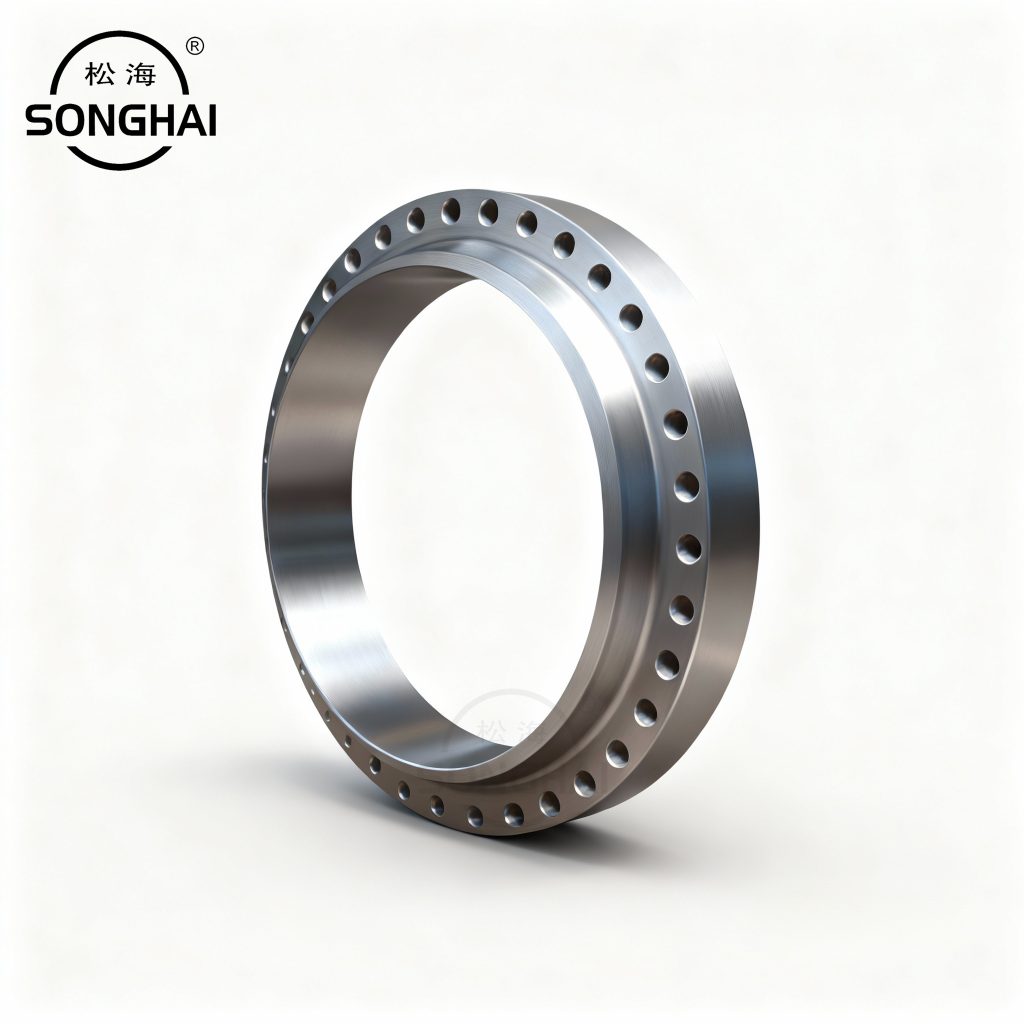
ASME B16.47 Series A and Series B flanges cover the same large-diameter range, but they are not interchangeable. At a given nominal pipe size and pressure class, their outside diameter, bolt circle, bolt quantity, bolt size, and facing geometry can differ. That means a Series A flange will not normally bolt directly to a Series B flange.
What does ASME B16.47 cover?
ASME B16.47 is the large-diameter steel-flange standard for NPS 26 through NPS 60. It covers pressure-temperature ratings, materials, dimensions, tolerances, marking, and testing for welding-neck and blind flanges. The standard contains two dimensional series: Series A, historically associated with MSS SP-44, and Series B, historically associated with API 605.
The series letter is not a quality grade and should never be used as a substitute for the complete flange callout. A purchase specification must state the applicable edition, series, flange type, NPS, pressure class, facing, material, and any supplementary project requirements.
Series A vs Series B flanges: at a glance
| Selection point | Series A | Series B |
|---|---|---|
| Historical basis | Formerly MSS SP-44 dimensions | Formerly API 605 dimensions |
| Envelope at same NPS/class | Generally a larger outside diameter and bolt circle | Generally a more compact outside diameter and bolt circle |
| Bolting pattern | Different bolt-hole count and/or bolt dimensions from Series B | Different bolt-hole count and/or bolt dimensions from Series A |
| Flange types covered | Welding-neck and blind flanges | Welding-neck and blind flanges |
| Typical decision driver | Existing Series A equipment, drawings, or project standard | Existing Series B equipment, drawings, or project standard |
| Direct mating with the other series | No—do not assume compatibility. Verify every mating dimension or use an engineered transition. | |
The most important difference: mating dimensions
Nominal size alone does not define a flange joint. For example, two NPS 36 flanges can both be ASME B16.47 Class 150 while still having different flange ODs, bolt circles, hole patterns, and gasket-seating dimensions because one is Series A and the other is Series B. Bolts cannot be “made to fit” safely by drilling, slotting, mixing gasket dimensions, or changing stud sizes in the field.
Before ordering, compare the current standard tables and the mating equipment drawing for the exact combination of NPS, class, series, flange type, face, material, and pipe wall. This is especially important for replacement blinds, exchanger nozzles, valves, pumps, and legacy line modifications.
Pressure class is not the same as working pressure
Both series use pressure classes within the scope of the standard. A Class number is a pressure-temperature rating designation, not a constant working-pressure value. The permitted rating depends on the flange material group and design temperature. Select the class from the applicable pressure-temperature tables and project piping code; do not choose Series A or Series B solely on the assumption that one series is always “high pressure” and the other always “low pressure.”
How to choose the correct series
- Match the mating item first. The series on the valve, vessel nozzle, existing spool, or piping is normally decisive.
- Identify the exact flange. Record ASME B16.47 edition, Series A or Series B, NPS, class, welding-neck or blind type, raised-face or ring-type-joint facing, material, and bore/schedule.
- Check design conditions. Confirm fluid, design temperature, design pressure, corrosion allowance, external loads, and any cyclic-service requirement.
- Specify the complete bolted joint. Include compatible gasket, studs/nuts, coating, tightening method, inspection, and documentation requirements.
- Control changes. If Series A must connect to Series B, use a designed transition spool or other engineering-approved solution. Do not modify a standard flange in the field.
Common applications
Large-diameter ASME B16.47 flanges appear on pipelines, storage and loading systems, water intake/discharge lines, process units, offshore and energy facilities, and large vessel connections. The application itself does not pick the series. Interchangeability with the mating flange and compliance with the approved piping specification do.
Frequent purchasing mistakes
- Writing only “ASME B16.47 flange” without identifying Series A or Series B.
- Assuming a flange is compatible because NPS and Class match.
- Using a legacy API 605 or MSS SP-44 reference without confirming the current project requirement.
- Omitting the face type, bore, material grade, and required test certificates.
- Replacing a blind flange without verifying its bolt pattern and gasket seating geometry.
FAQ
Are Series A and Series B flanges interchangeable?
Usually no. They are separate dimensional series. Treat them as incompatible unless the exact mating dimensions have been verified by the responsible engineering team.
Does Series A always have a higher pressure rating?
No. The applicable pressure-temperature rating is determined by the exact class, material group, temperature, and governing standard. Series selection is primarily a dimensional compatibility decision.
What should appear on an RFQ?
Include: ASME B16.47 edition; Series A or Series B; NPS; class; welding-neck or blind; raised-face or RTJ face; material; bore/pipe schedule; quantity; coating; gasket and bolting scope; inspection/testing; and certification requirements.
Conclusion
For series a vs series b flanges, the safest rule is simple: match the exact series already defined by the mating equipment and project specification. Confirm every joint dimension and select the pressure class using the correct material-temperature rating. This turns a large-diameter flange purchase from a near match into a dependable engineered connection.