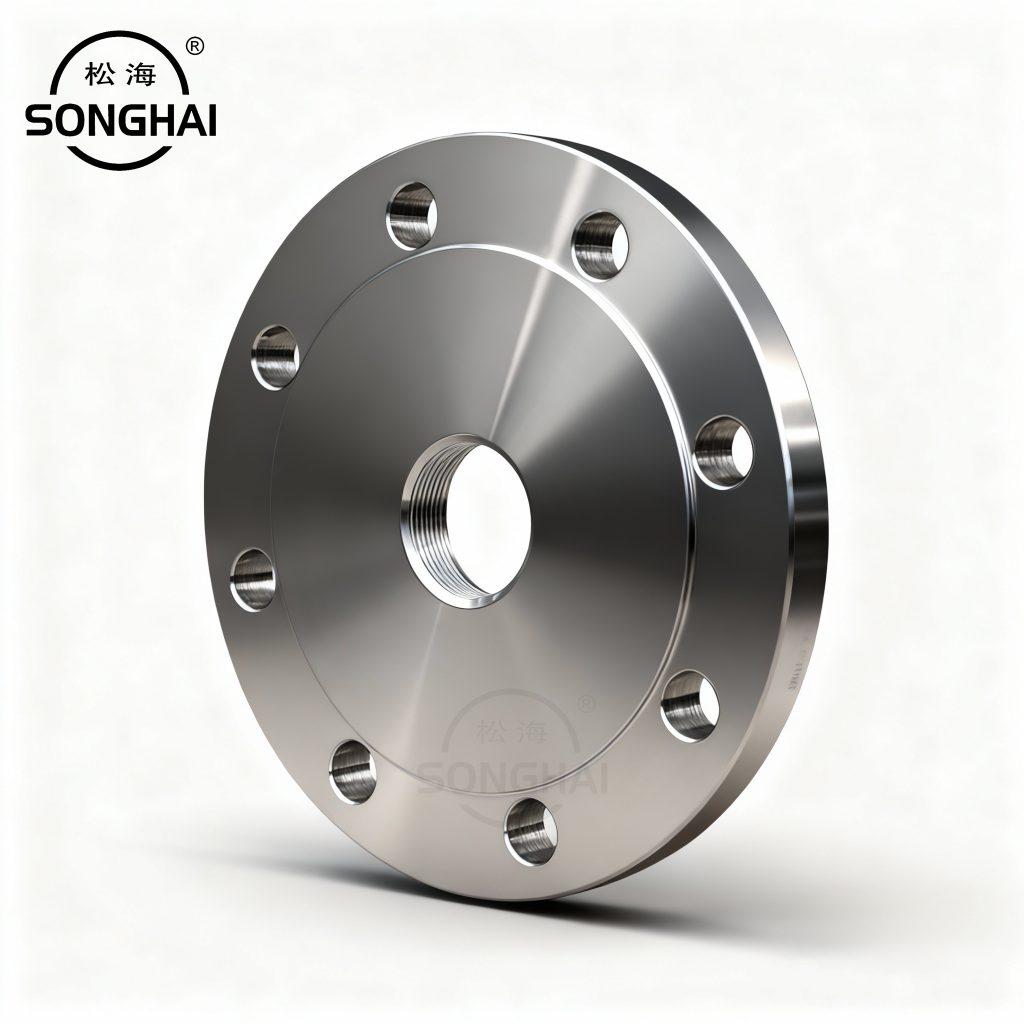
High pressure flanges are engineered pressure-boundary components used where piping, valves or equipment must maintain a bolted seal under demanding pressure-temperature conditions. A high pressure flange is not defined simply by looking thicker than another flange. Its suitability depends on the governing standard, material group, pressure-temperature rating, nominal size, facing, gasket, bolting, piping loads and the actual fluid service.
This guide explains what engineers and buyers should verify when selecting high pressure flange connections. Always use the project-controlled code, current standard edition, approved calculations and equipment requirements as the final design basis.
What makes a flange a high pressure flange?
A flange becomes suitable for higher-pressure duty through a complete engineered design. The flange body must have adequate strength; the bolt pattern and fasteners must develop the intended gasket load; the facing and gasket must seal at operating conditions; and the materials must retain the required properties at temperature. System effects such as pressure surges, thermal expansion, vibration, pipe weight and equipment nozzle loads must also be considered.
For that reason, a pressure class or rating cannot be read independently of material and temperature. A designation that is acceptable at one temperature may have a different allowable pressure at another. Never select high pressure flanges by nominal pipe size or a marketing label alone.
High pressure flange joint: the parts work together
| Joint element | Role in high-pressure service | What to verify |
|---|---|---|
| Flange body and hub | Transfers bolt load and resists internal pressure and external loads. | Standard, material, nominal size, rating basis, type and dimensions. |
| Facing | Provides the controlled surface on which the gasket seals. | RF, RTJ or other project-specified facing; finish and mating compatibility. |
| Gasket | Creates the pressure-tight seal when compressed correctly. | Material, geometry, chemical compatibility, temperature capability and load requirement. |
| Bolting | Applies and maintains gasket compression. | Stud/nut material, diameter, length, lubrication and tightening method. |
| Pipe or equipment connection | Delivers pipe movement and nozzle loads into the joint. | Flange type, weld detail, supports, alignment and stress analysis inputs. |
Common high pressure flange configurations
Different flange types can be used in high-pressure applications when they are permitted by the applicable piping class. Weld-neck flanges are commonly selected for demanding process piping because their tapered hub and butt-welded connection can provide a controlled transition between flange and pipe. Blind flanges close a pressure boundary at a line end or nozzle; because they see pressure across a solid disc, their design and thickness are especially important.
Socket-weld or threaded arrangements may appear in certain smaller-bore systems when specifically allowed, but their suitability must be checked against the service, code and inspection requirements. Do not substitute flange types solely because the external bolt pattern appears similar.
| Configuration | Typical role | High-pressure selection focus |
|---|---|---|
| Weld-neck flange | Butt-welded piping connection with a tapered hub. | Pipe schedule match, weld procedure, material, facing and external loading. |
| Blind flange | Closure for a pipe end, vessel nozzle or future connection. | Solid-disc pressure loading, thickness, bolting and handling weight. |
| Socket-weld flange | Compact small-bore socket connection where permitted. | Service limits, insertion gap, fillet weld detail and inspection access. |
| Threaded flange | Screwed pipe connection where permitted by the piping class. | Thread engagement, sealant compatibility, vibration and crevice considerations. |
| Special metal-seal joint | High-integrity services requiring a specified metallic sealing geometry. | Exact groove, ring or proprietary system, material and controlled assembly procedure. |
Facing and gasket selection
Many high pressure flanges use a raised-face (RF) or ring-type-joint (RTJ) arrangement, but the right choice is determined by the approved joint design. A raised-face gasket, a full-face gasket and a metallic ring gasket are not interchangeable. The face geometry, surface condition, gasket dimensions and bolt load must all match the specific standard and service.
RTJ connections use precisely defined grooves and metallic ring gaskets. They require close dimensional control and a documented assembly approach. Do not use a gasket intended for one facing on a different facing, and do not rely on higher bolt torque to correct a face mismatch or damaged sealing surface.
Material selection for high pressure flanges
Material selection begins with pressure-temperature strength but must also address corrosion, hydrogen or sour-service concerns where applicable, low-temperature toughness, process contamination, erosion and fabrication requirements. Carbon steel, stainless steel, low-alloy steel, duplex grades and nickel alloys may all be appropriate in different services. The material grade, heat treatment, testing and certification requirements belong on the purchase specification.
| Service condition | Material-selection question | Typical documentation to define |
|---|---|---|
| Elevated temperature | Does the grade retain required strength at design temperature? | Material grade, pressure-temperature basis and heat-treatment requirements. |
| Corrosive process | Is the alloy compatible with fluid chemistry, chlorides or cleaning chemicals? | Alloy grade, corrosion allowance, PMI and surface-treatment requirements. |
| Low temperature | Is impact toughness or low-temperature qualification required? | Impact-test requirements, traceability and controlled certification. |
| Cyclic pressure or vibration | What fatigue and external load inputs affect the connection? | Stress-analysis inputs, weld detail, supports and inspection plan. |
| Critical containment | What is the consequence of leakage and how is joint integrity controlled? | Gasket/bolting procedure, NDE, hydrotest and quality records. |
Installation and inspection controls
The performance of a high pressure flange depends as much on assembly as on component selection. Qualified personnel should follow the project’s bolting, gasket handling and isolation procedures. Before assembly, confirm face cleanliness, flange identity, gasket type, bolt material and pipe alignment. Do not use flange bolts to pull a misaligned spool into place.
- Verify the flange marking, certificate and dimensions against the approved material specification.
- Inspect sealing faces and grooves for corrosion, dents, scoring and foreign material.
- Use the specified gasket only; protect it from damage and contamination before installation.
- Apply the approved tightening pattern, lubricant and load-control method.
- Document inspection, pressure testing and any project-required torque or tension records.
- Review piping supports so sustained weight, thermal growth and vibration do not overload the joint.
Procurement checklist
A clear purchase order for high pressure flange components should state the applicable standard and edition, nominal size, rating basis, flange type, facing, material grade, bore or pipe schedule, end preparation, bolting/gasket requirements, inspection scope, markings, certificates and delivery documentation. When flanges mate to equipment, include the equipment drawing and the exact drilling/facing specification.
Frequently asked questions
Are high pressure flanges only for oil and gas?
No. They can be used in any industry where the pressure-temperature duty and containment requirements demand an engineered bolted joint, including power, chemical processing, water treatment, hydrogen and industrial manufacturing.
Can a higher-class flange always replace a lower-class flange?
No. The mating connection, bolt pattern, facing, piping class, equipment design and project approval must all be compatible. Never substitute a flange without engineering authorization.
Is a high pressure flange automatically leak-proof?
No. Sealing depends on a correctly specified and assembled system: flange, gasket, bolts, pipe alignment and operating conditions. Material certificates alone do not prove a completed joint will seal.
Final takeaway
High pressure flanges are engineered systems rather than simply heavier flanges. Define the pressure-temperature design basis, applicable standard, configuration, facing, gasket, bolts, materials, inspection and piping loads together. Songhai can support drawing review, controlled manufacture and documentation for industrial high-pressure flange requirements.